CPSC eFiling requirements 2026: Complete Guide for US Importers & Amazon Sellers
Blog 2026-07-20
CPSC eFiling 2026 represents the most transformative update to U.S. consumer product import enforcement in over a decade, reshaping how compliance certificates are submitted, verified, and enforced at the border.
For U.S. importers, Amazon FBA sellers, and wholesale buyers sourcing from China, mastering CPSC eFiling requirements 2026 is no longer a back-office administrative task — it directly determines whether your cargo clears customs on schedule, avoids costly port detentions, and keeps your sales channels fully operational. As an NVOCC-certified and AEO-advanced China-US DDP logistics provider with 15 years of hands-on customs experience, Yunxi Logistics has compiled this actionable guide based on real-world pilot shipment data and in-house regulatory expertise, to help you navigate the new mandate with confidence.
1. What Is the CPSC eFiling Mandate & When Does It Take Effect?
Many merchants mistakenly assume the CPSC new rule 2026 is simply a shift from paper to digital certificates. In reality, it integrates CPSC compliance data directly with the U.S. Customs and Border Protection (CBP) ACE system, enabling automated, real-time validation at the time of import entry.
Key Changes From the Old Certificate Compliance Rules
Under the previous system, importers only needed to hold a valid CPC or GCC certificate and present it upon request. Under the new eFiling framework, certificate data must be submitted electronically before or at the time of customs filing — cargo without matching eFiling records will be flagged automatically, even if you carry a physical certificate.
This change has particularly critical implications for LCL (less-than-container load) shipments: a single non-compliant shipment in a shared container can delay clearance for every cargo owner in the same consolidation.
The mandate officially takes effect on July 8, 2026 for most import entries, with a delayed effective date of January 8, 2027 for goods entering through U.S. Foreign Trade Zones. While CBP is expected to phase in enforcement gradually through Q3 2026, inspection rates for high-risk categories will rise sharply during the Q4 peak shipping season.
At Yunxi Logistics, our in-house Customs Clearance team has been processing pilot eFiling entries since Q2 2026, and we have observed that unfiled shipments see an average clearance delay of 5–7 days compared to compliant cargo.
2. Full CPSC eFiling requirements 2026: Who Must Comply & What Products Are Covered
A common question from new importers is whether small-batch or low-value shipments are exempt. The short answer: if you are importing consumer products subject to CPSC jurisdiction into the U.S., you must comply — regardless of shipment size or declared value. There is no de minimis exemption under the new rule.
Understanding the full scope of CPSC eFiling requirements 2026 starts with clarifying who bears legal responsibility.
Importer of Record CPSC eFiling Responsibility
The Importer of Record (IOR) bears full legal responsibility for completing accurate eFiling submissions. This is true whether you use your own U.S. entity or a third-party IOR service. For sellers sourcing from China, this means compliance cannot be delegated entirely to your factory — you are ultimately accountable for the accuracy of the data filed at the border.
Product Categories That Require CPC vs. GCC eFiling
CPSC certificate of compliance eFiling falls into two primary categories, each with distinct testing and documentation requirements:
- Children’s Product Certificate (CPC): Required for all products designed or intended primarily for children 12 years of age or younger, including toys, children’s clothing, furniture, and feeding products. These require third-party lab testing to CPSC safety standards.
- General Certificate of Conformity (GCC): Required for non-children’s consumer products subject to CPSC rules, such as household appliances, power tools, eyewear, and mattresses. These are self-certified by the manufacturer or importer based on reasonable testing.
HTS Codes & High-Risk Product Categories to Watch
Based on our clearance data, the following categories face the highest CPSC inspection rates and should be prioritized for early eFiling setup:
- Toys and children’s products (the highest enforcement priority)
- Household goods and small kitchen appliances
- Consumer electronics and battery-powered devices
- Mattresses, bedding, and upholstered furniture
For LCL shippers, our Consolidation & Warehousing hubs in China run pre-booking compliance screenings to flag high-risk categories early, so you have time to complete testing and filing before your cargo is loaded.
3. CPSC eFiling Process Step by Step: How to File Correctly
Navigating CPSC eFiling requirements 2026 successfully depends on a clear, logistics-aligned filing workflow. While the CPSC provides official system instructions, most importers benefit more from a process tied to their shipping timeline. Below is the practical, port-tested workflow we use for our DDP clients.
Required Documentation for CPSC eFiling Submission
Before you begin, gather all of the following mandatory data elements:
- Valid test report from a CPSC-accepted laboratory (for CPC products)
- Completed CPC or GCC certificate with all required data fields
- Accurate product identifiers, model numbers, and manufacturer details
- Importer of Record legal name and EIN/Tax ID
- HTS code alignment for each SKU
- Records custodian contact information
CPSC eFiling required documentation must match exactly between your certificate, your customs entry, and your product labeling. Even minor discrepancies — such as a misspelled manufacturer name — will trigger a rejection.
Two Filing Paths: PGA Message Set vs. Product Registry
There are two approved methods to submit eFiling data to CPSC:
- PGA Message Set via ACE: Submitted directly through your customs broker at the time of entry filing. This is the standard method for most commercial shipments and works well for one-time or low-volume imports.
- CPSC Product Registry: A pre-registration system where you file product data in advance and assign a registry number to each SKU. This is more efficient for high-SKU, frequent LCL shippers and FBA sellers with regular replenishment cycles.
Common Mistakes That Cause Rejection or Delays
From our pilot program experience, the top causes of eFiling rejection are:
- Mismatched IOR information between the certificate and customs entry
- Expired or non-accredited test reports
- Missing tracking information on the certificate
- Incorrect product classification (CPC vs. GCC)
For sellers shipping inventory to Amazon, our Amazon FBA DDP shipping from China to USA service includes a pre-submission eFiling document review as part of our standard compliance checks, helping you catch errors before they cause port delays.
We also offer comprehensive China Pickup Services that align with your compliance timeline, so you can schedule factory pickup only after your documentation is fully verified.
4. CPSC eFiling Penalties for Non-Compliance: Risks for Importers
Failing to meet CPSC eFiling requirements 2026 triggers automated enforcement consequences with no discretionary exceptions. For importers running on tight inventory schedules, even a short delay can erase months of margin.
Customs Detention, Seizure & Additional Fees
CPSC customs hold on imports is the most immediate risk. Non-compliant cargo can be detained at the port for 30–90 days while the issue is resolved. During this time, you will incur:
- Daily port storage and demurrage charges ($180–$250 per container, shared proportionally for LCL cargo)
- Warehouse examination fees
- Potential re-export or destruction costs if the issue cannot be cured
For repeated violations or intentional non-disclosure, CPSC may issue civil penalties of up to $120,000 per individual violation, with maximum annual penalties exceeding $15 million for severe cases.
Amazon & Marketplace Impacts: Listing Removal & Account Risks
Beyond customs, Amazon and other U.S. marketplaces are updating their seller policies to align with the new rule. Sellers may be required to upload eFiling confirmation records to their seller accounts, and non-compliant listings can be removed or suspended. For FBA sellers, inbound shipments may also be refused at fulfillment centers if supporting compliance documentation is not on file.
5. Amazon FBA CPSC eFiling Requirements for Sellers
For Amazon FBA sellers, CPSC eFiling requirements 2026 add a second layer of compliance on top of existing platform inbound rules. You must satisfy both CBP/CPSC import rules and Amazon’s internal safety policies.
How eFiling Affects FBA Shipments From China
When you ship inventory from China to an FBA warehouse, your cargo goes through two compliance checkpoints: U.S. customs clearance and Amazon’s receiving inspection. The CPSC eFiling mandate adds a mandatory data check at the first checkpoint, and Amazon is expected to cross-verify eFiling records for regulated categories in 2026.
This is especially critical for sellers using LCL consolidation: if your freight forwarder does not screen co-loaded cargo for eFiling compliance, a single non-compliant shipment in the same container can delay your entire FBA restock.
How to Sync eFiling Data With Your Supplier & Freight Forwarder
To avoid disruptions, establish a clear workflow with your Chinese supplier and logistics partner:
- Confirm test reports and certificates are finalized before production ships
- Share complete eFiling data with your freight forwarder at least 3 business days before LCL cutoff
- Verify that the IOR named on the certificate matches the IOR used for customs entry
- Retain all records for at least 5 years per CPSC requirements
Amazon seller CPSC compliance 2026 is most manageable when you work with a forwarder that understands both FBA operations and U.S. import regulatory requirements, rather than treating compliance as an afterthought.
6. CPSC Compliant Shipping From China to US: Logistics & Customs Clearance Solutions
Building a shipping workflow that aligns with CPSC eFiling requirements 2026 does not require you to become a regulatory expert — it requires a logistics partner that builds compliance into every step of the shipping journey. At Yunxi Logistics, we have integrated eFiling support into our full DDP service portfolio, so you can ship with confidence without managing multiple vendors.
Benefits of Working With a CPSC Compliant Freight Forwarder
Choosing a forwarder with in-house compliance and brokerage capabilities delivers three key advantages:
- Pre-shipment risk mitigation: We screen your documentation before cargo leaves China, not after it arrives at the U.S. port, drastically reducing detention risk.
- LCL cargo protection: Our consolidation protocols ensure all cargo in a shared container meets eFiling requirements, so you are not delayed by another shipper’s non-compliance.
- Single point of accountability: Our in-house brokerage team handles both customs entry and PGA eFiling submission, eliminating handoff errors between third-party brokers.
We offer a full range of services to support compliant importing:
- For e-commerce sellers: Amazon FBA DDP shipping from China to USA with built-in FBA inbound compliance support
- For importers and wholesalers: commercial and residential DDP delivery covering all 48 contiguous U.S. states
- For large and heavy goods: oversized cargo DDP shipping solutions with reinforced packaging and dedicated final-mile handling
- For battery and electronic products: battery and dangerous goods logistics that combines DG safety compliance with CPSC eFiling requirements
- For full service portfolio: Explore our full range of China-US freight services to find the right fit for your business
Our Last-Mile Delivery fleet operates independently of common parcel carrier networks, so even during peak season congestion, your compliant cargo moves to its destination on schedule.
As part of our end-to-end Logistics Solutions, we also provide IOR services for clients who do not yet have a U.S. import entity, helping you establish a compliant import footprint quickly. We design Tailored Logistics Solutions that match your product category, shipment volume, and compliance needs.
7. Action Plan: Get Your Shipments Ready Before the Deadline
To fully align your operations with CPSC eFiling requirements 2026 before enforcement ramps up, follow this structured action plan. Waiting until the July 8 deadline to prepare will leave you vulnerable to testing lab backlogs, system onboarding delays, and peak-season shipping congestion.
For Amazon Sellers & Small Importers (30-Day Quick Start)
- Audit your current product catalog to identify which SKUs fall under CPSC jurisdiction
- Confirm all test reports are valid, current, and issued by a CPSC-accepted lab
- Register for a CPSC business account and set up your product registry for high-volume SKUs
- Share your compliance documentation with your freight forwarder and confirm their eFiling capabilities
- Run a test shipment before peak season to validate your workflow
For Wholesale Importers & Retail Brands (90-Day Full Rollout)
- Standardize compliance requirements across all your Chinese suppliers
- Implement a pre-production documentation review process
- Integrate eFiling status into your Supply Chain Management tracking system
- Train your operations and procurement teams on the new requirements
- Establish a recurring compliance review schedule to stay current on rule updates
LCL Shipping Timeline Tip
Given standard China-US LCL transit times of 18–22 days door-to-door, you should complete all eFiling setup at least 10 days before your intended ship date. This leaves buffer time for document corrections and system processing.
8. Frequently Asked Questions (FAQ)
What is the CPSC eFiling rule for 2026?
The 2026 CPSC eFiling rule requires importers to submit electronic compliance certificate data directly to CPSC via the CBP ACE system for all regulated consumer products, replacing the prior system of holding certificates for on-request review.
When does the CPSC eFiling mandate take effect?
The mandate takes effect July 8, 2026 for most standard import entries, with a delayed effective date of January 8, 2027 for Foreign Trade Zone entries.
Do Amazon sellers need CPSC eFiling?
Yes. Any Amazon seller importing regulated consumer products into the U.S. must complete CPSC eFiling at the time of import. Amazon may also require proof of eFiling for product listings in regulated categories.
Who is responsible for CPSC eFiling on imports?
The Importer of Record (IOR) bears the legal responsibility for accurate and timely eFiling submission. A customs broker or freight forwarder can assist with filing, but ultimate accountability rests with the IOR.
What happens if I don’t file CPSC eFiling?
Unfiled cargo will be flagged in the ACE system and may be detained at the port. Extended detentions lead to demurrage fees, and repeated or intentional non-compliance can result in CPSC civil penalties.
How to avoid CPSC customs detention from China?
The most effective way is to complete all testing and eFiling before your cargo ships, work with an experienced customs broker, and use a freight forwarder that performs pre-shipment compliance screening.
Can my freight forwarder handle CPSC eFiling?
Licensed customs brokers with PGA filing authority can submit eFiling data on your behalf. At Yunxi Logistics, our in-house brokerage team provides eFiling support as part of our DDP shipping services.
Adapting to CPSC eFiling requirements 2026 is a permanent shift for U.S. import supply chains. For importers and sellers sourcing from China, the right logistics partner can turn this regulatory change from a burden into a competitive advantage — by reducing delay risk, improving inventory predictability, and keeping your sales channels running without interruption.
At Yunxi Logistics, we combine 15 years of cross-border logistics expertise, NVOCC and AEO dual certification, 1M+ square feet of U.S. warehouse space, and a 300+ unit self-operated truck fleet to deliver reliable, compliance-first DDP shipping from China to the U.S.
Appendices
Appendix 1: Step-by-Step Guide for CPSC eFiling Registration
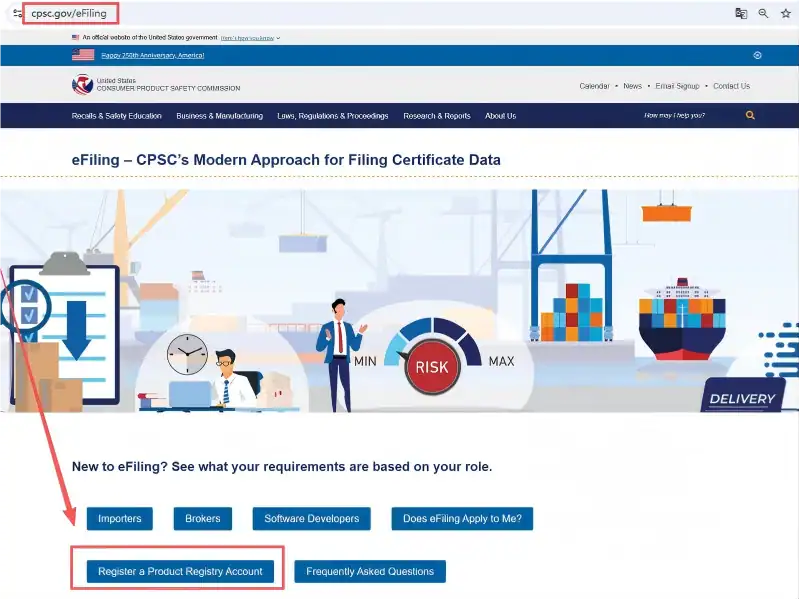
Step 1: Visit the official portal at https://www.cpsc.gov/efiling and click on “Register a Product Registry Account.”
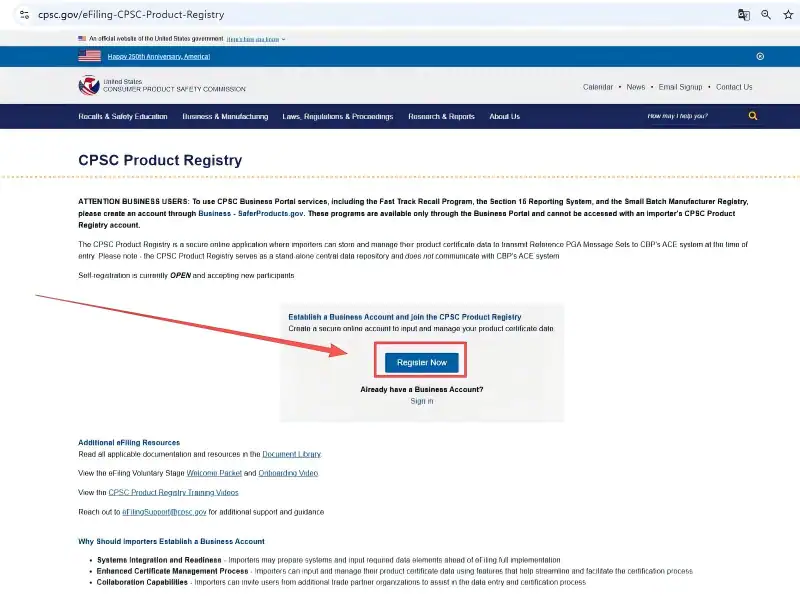
Step 2: Select “Register Now” to automatically redirect to the official account creation interface.
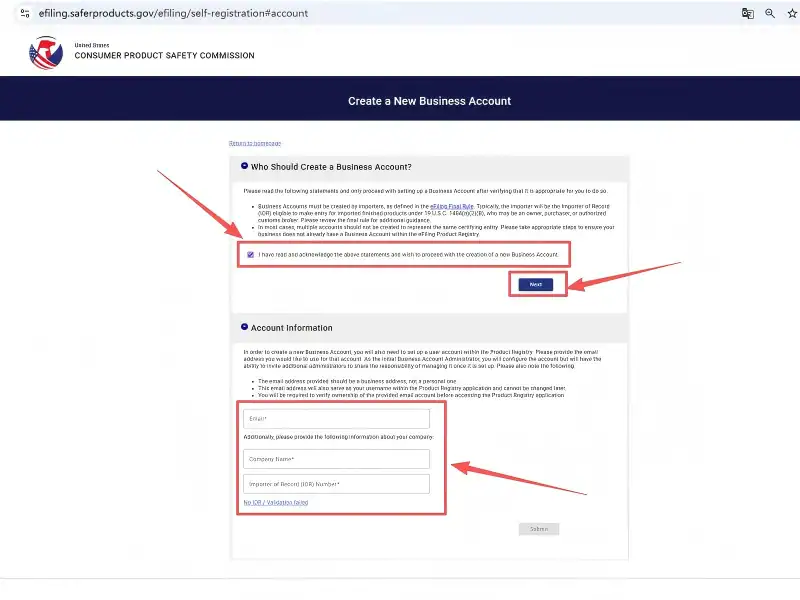
Step 3: Carefully review the mandatory legal disclosures and compliance disclaimers. Check the acknowledgment box, click “Next,” and complete the required corporate profile and importer information.
Appendix 2: Official CPSC eFiling Resources & Compliance Downloads for Importers
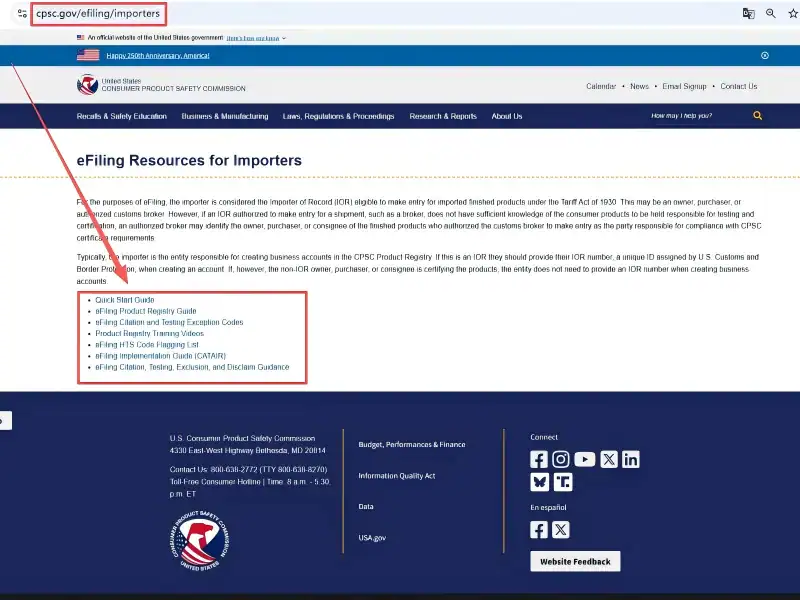
Access official federal guidelines, technical specifications, and importer toolkits directly via the CPSC portal:
Official URL: https://www.cpsc.gov/efiling/importers
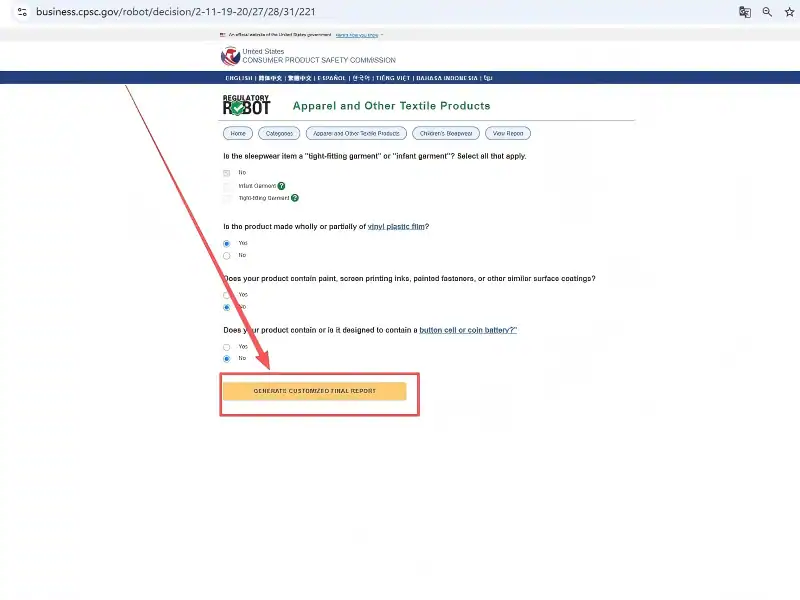
Appendix 3: User Guide for the CPSC Regulatory Robot Compliance Tool
Step 1: Navigate to https://www.cpsc.gov/efiling and locate the “Regulatory Robot” tool within the main navigation menu.
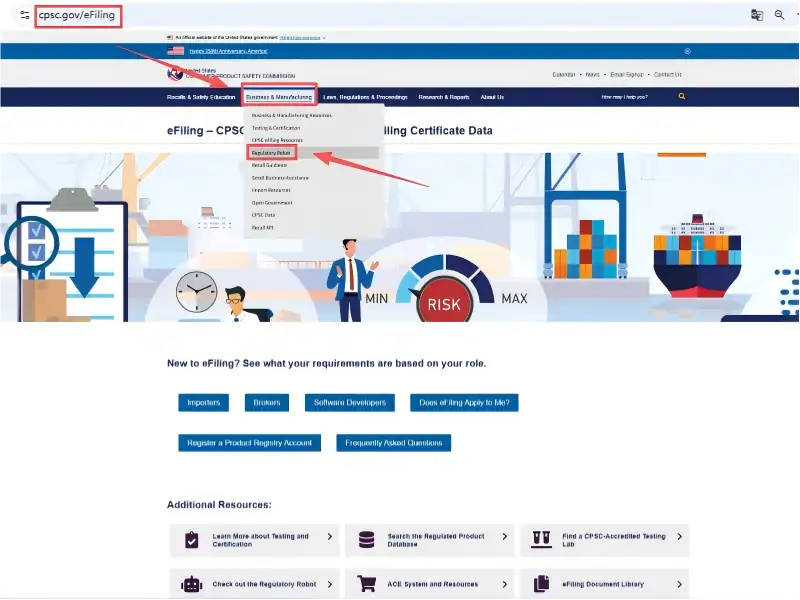
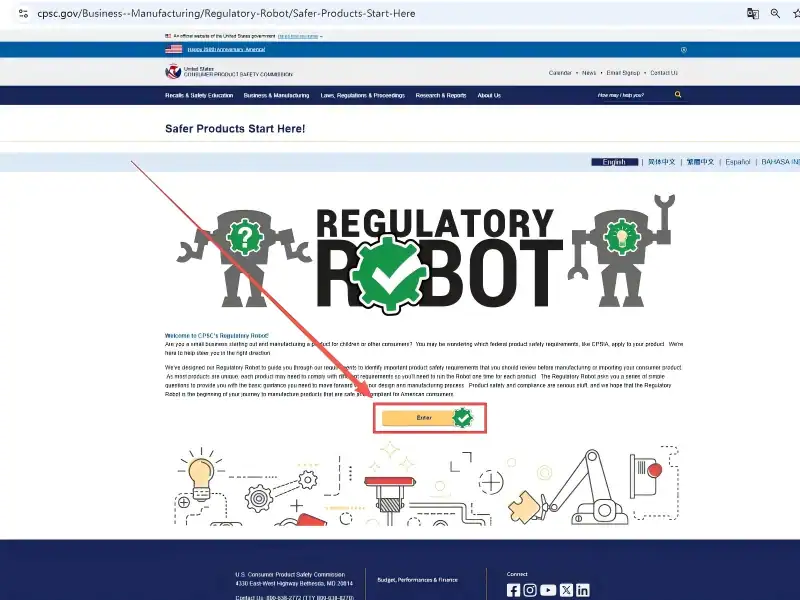
Step 2: Click “Enter” to launch the interactive compliance wizard.
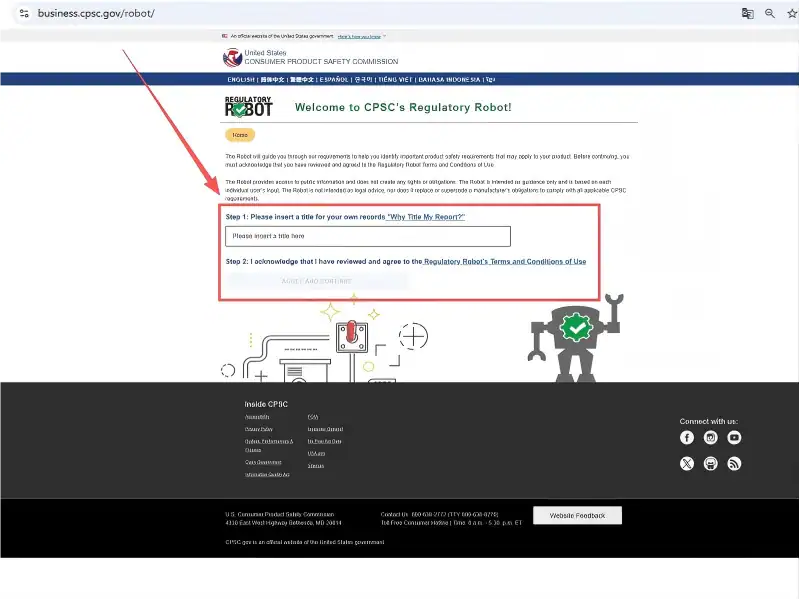
Step 3: Define a custom title for your current search session (essential for internal corporate auditing and subsequent shipment tracking), then click to accept the terms and proceed to the query dashboard.
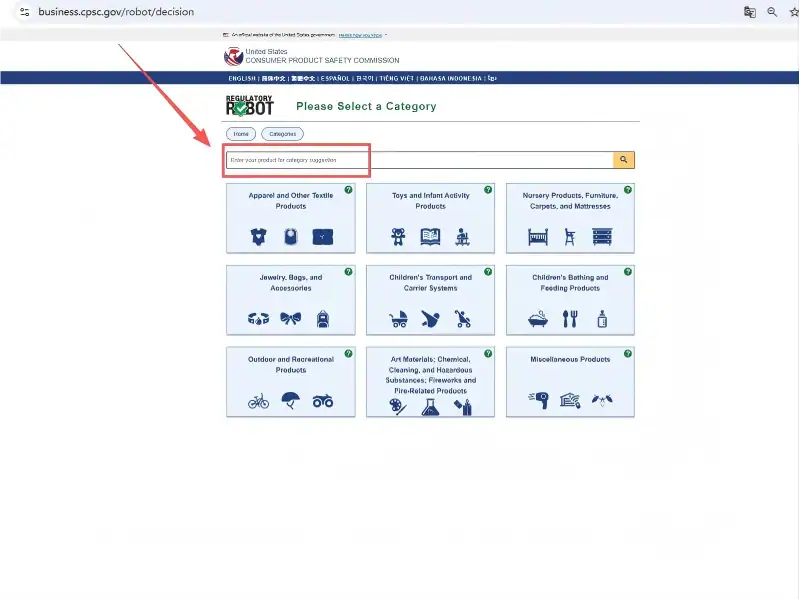
Step 4: Input your specific product name or descriptive keywords to receive automated category recommendations, and follow the system prompts to select the precise attributes of your merchandise.
Step 5: Complete the data entry questionnaire, and the system will automatically generate a comprehensive regulatory report detailing:
- Whether the product falls under U.S. CPSC jurisdiction.
- Whether a General Certificate of Conformity (GCC) or Children’s Product Certificate (CPC) is legally required.
- The exact safety standards and federal statutory regulations applicable to your cargo.
- Whether mandatory third-party laboratory testing is required.