The direct to FBA vs 3PL warehouse decision depends on whether your inventory needs a U.S. storage and replenishment layer. Consider direct delivery when products are prepared for the confirmed FBA shipment plan and you do not need planned buffer storage. Consider a 3PL first when you need staged replenishment or additional warehouse work. Compare identical inventory over the same period, including handling, storage, all deliveries, and applicable Amazon charges. Neither route is always cheaper or faster. Here, “direct” means no planned buffer storage; necessary deconsolidation, cross-docking, or delivery staging may still occur.
Have an order taking shape? Share the cargo details and intended replenishment pattern to request a shipment-specific comparison.
What “Direct to FBA” and “3PL First” Actually Mean
Direct delivery can still include necessary handling
A direct route can run from a Chinese supplier through export, international transportation, U.S. import clearance, and delivery to Amazon. For less-than-container-load cargo, unloading and separating consignments may be necessary before final delivery. Truck transfers and appointment staging can also occur.
Ask where the cargo will stop, what happens at each stop, and when storage charges begin. “Direct” on a quotation does not establish those details by itself.
A 3PL adds storage and replenishment decisions
With a 3PL-first route, cleared inventory enters a U.S. third-party logistics warehouse. Agreed quantities remain there until released for FBA replenishment. Receiving, inventory records, preparation, dispatch, and delivery become separate tasks to specify.
The direct to FBA vs 3PL warehouse comparison concerns where stock waits before FBA. Both routes can end in FBA fulfillment. A consolidation warehouse in China serves a different location and purpose. Amazon Warehousing and Distribution (AWD) is also a separate Amazon bulk-storage and distribution program; an independent 3PL should not be assumed to provide AWD’s integrated replenishment features.
Which Route Fits Your Inventory and Preparation Needs?
Start with what the inventory needs after import, rather than the shipment’s size alone. A prepared order for near-term demand may need little beyond delivery. A mixed order intended for several replenishment cycles may benefit from a local reserve, provided someone can manage releases.
Use this direct to FBA vs 3PL warehouse decision table before asking for prices:
| Decision factor | Direct FBA delivery | 3PL first |
|---|---|---|
| Preparation complete | Can fit a confirmed shipment plan | Establish what extra handling would accomplish |
| Labeling or repacking needed | Complete and verify before FBA delivery | Confirm the warehouse accepts the work and quote it |
| Inventory needed in stages | Compare separate departures from China | Compare storage and every replenishment delivery |
| Uncertain SKU demand | Review how much of each SKU to commit | Require SKU-level records and release controls |
| Urgent replenishment | Verify the complete journey to Amazon | Include receiving, processing, dispatch, and delivery |
| Stock reserved for other channels | Decide quantities before dispatch | Confirm segregation and supported outbound services |
Amazon’s preparation requirements still apply to inventory sent from a 3PL. Moving the work to the U.S. changes where it is performed, rather than removing it. Confirm the current requirements for the actual product and shipment in Seller Central.
For the direct to FBA vs 3PL warehouse decision, storage flexibility has value only if releases are executable. Ask about order cutoffs, processing lead times, inventory reports, and who resolves discrepancies. A nearby reserve cannot prevent a stockout if the replenishment order remains unapproved.
Compare the Full Cost Over the Same Planning Period
Separate shared costs from route-specific costs
Build the direct to FBA vs 3PL warehouse cost comparison around the same SKUs, quantities, demand assumptions, and planning dates. Include stock still held at the end of the period. Comparing a complete direct shipment with only the first 3PL release understates the second route’s obligations.
Some origin, freight, and import expenses may be shared. Others change with the route, shipping date, or destination. Carry identical costs through consistently, and obtain separate figures where the routing changes.
| Cost item | What to compare on both routes |
|---|---|
| China origin charges | Pickup, consolidation, export handling, and any preparation |
| International freight | Same cargo measurements; account for split departures if proposed |
| Import-related charges | Clearance, duties, and included or excluded services under the agreed arrangement |
| Destination handling | Port collection, deconsolidation, transfers, and delivery staging |
| 3PL receiving | Charging unit, count verification, unloading, and minimum charge |
| Storage | Billable space, duration, rounding, minimums, and rate changes |
| Prep and outbound handling | Labeling, materials, palletizing, picking, and each release |
| All FBA deliveries | Every shipment and destination, plus applicable appointment or redelivery costs |
| Amazon charges | Applicable inbound placement and FBA storage charges under each plan |
| Exceptions and minimums | Agreed treatment of waiting, failed delivery, discrepancies, and extended storage |
A bundled quote needs an inclusion map. If destination handling already includes unloading and palletizing, do not add them again. Likewise, do not assume an international DDP quote includes months of reserve storage or repeated domestic replenishment.
Keep the comparison of Amazon FBA inbound placement fees separate from the storage-route decision. Using a 3PL does not by itself establish a fee exemption. Check the actual shipment options and charges in Seller Central.
A coordinated West Coast option for eligible FBA shipments
As a designated freight forwarder for leading Amazon sellers, Yunxi Logistics offers an Amazon Freight service option for eligible FBA shipment plans, with applicable inbound placement fees paid in advance by Yunxi under the agreed channel terms. For confirmed plans covering inventory intended for Western, Central, or Eastern U.S. markets, shipments are delivered to qualifying Amazon-assigned West Coast receiving facilities, with onward transfers handled within Amazon’s network. Estimated delivery to the designated West Coast facility is 25–30 days after vessel departure, subject to sailing schedules, customs clearance, and delivery appointments; subsequent Amazon transfers and inventory availability follow Amazon’s operating process. By coordinating transportation, placement-fee payment, and final delivery, Yunxi aims to provide an efficient, dependable, and cost-effective FBA inbound service that simplifies China-to-U.S. logistics.
Calculate storage against the release schedule
Illustrative example — a calculation method, not a market rate or Yunxi quotation: Assume four billable pallet positions are occupied for 15 days, then two positions for the next 15 days after a partial release. Assume no repalletization or change in the billing basis.
Only if the provider bills daily at an agreed rate of r dollars per pallet position does storage equal 90 × r dollars. Monthly minimums, started-month billing, or a different space measurement require a different calculation. Add receiving, release handling, all deliveries, and applicable Amazon costs separately.
For direct to FBA vs 3PL warehouse budgeting, record potential stockout losses or damage exposure in a separate scenario sheet. They are uncertain business outcomes, not confirmed freight charges. Test a slower-sales scenario too: longer storage and smaller releases may change the result.
If the quotations use different endpoints or billing units, have those reconciled before selecting a route.
Who Controls the FBA Replenishment Process?
A direct to FBA vs 3PL warehouse decision also assigns work. The following is a suggested allocation to confirm in writing, not a statement that every provider includes these tasks.
| Task | Seller | Supplier | 3PL | Freight or delivery provider | Evidence |
|---|---|---|---|---|---|
| Monitor demand and approve replenishment | Own decision | Supply production updates | Report stock as agreed | Provide transport estimates | Approved SKU quantities |
| Create FBA shipments and release labels | Own or explicitly authorize | Receive relevant instructions | Use approved documents | Check delivery instructions | Shipment IDs and label files |
| Match physical cargo to records | Resolve discrepancies | Supply accurate packing data | Count and flag differences | Check transport quantities | Receiving and packing records |
| Complete preparation | Approve specification | Perform origin work if agreed | Perform destination work if agreed | Confirm transport readiness | Photos and completed work order |
| Release and dispatch | Authorize release | Confirm origin dispatch if relevant | Pick and hand over stock | Arrange transport and required appointments | Release order and tracking |
| Review delivery and Amazon receipt | Monitor and follow up | Supply supporting records | Retain handover records | Provide delivery evidence | POD and Seller Central status |
Do not assume the warehouse monitors Amazon inventory or creates shipments automatically. If either service is included, define account access, approval limits, reporting frequency, and exception handling. The party applying labels needs the files for the correct shipment and cartons.
Track three separate milestones: warehouse dispatch, carrier delivery, and Amazon receiving. A proof of delivery (POD) supports the transport handoff; it does not establish that every unit is immediately available for sale. Check the shipment’s events and unit status in Seller Central.
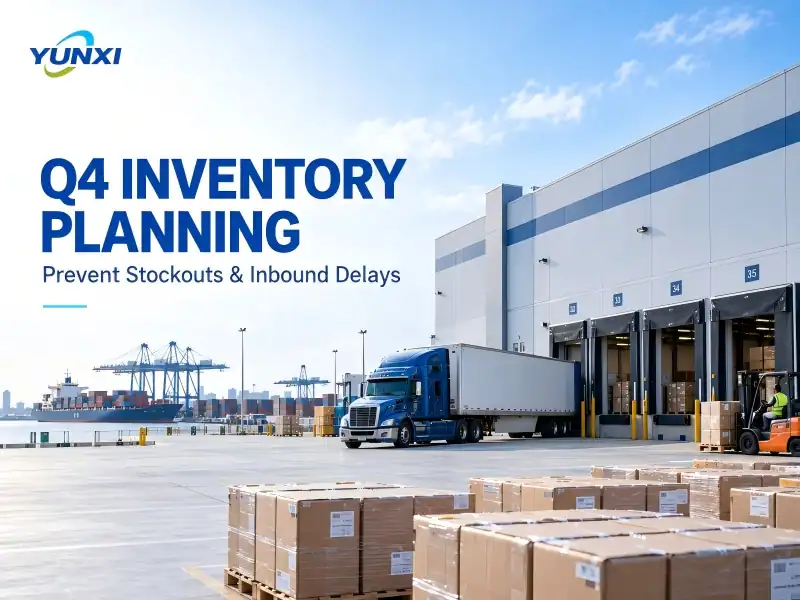
For seasonal timing, use the Q4 inventory planning guide alongside this route comparison. Work backward through the warehouse and delivery stages as well as international transit; confirm current dates for the actual plan.
A Pre-Booking Checklist and Three Practical Scenarios
Scenario A: A small, prepared order
Illustrative example: A seller has a small order of ordinary consumer goods, completed preparation, and a confirmed FBA shipment plan. All units are intended for near-term Amazon demand.
Evaluate direct delivery first. Ask whether any planned U.S. storage would add a useful function. Still verify destination handling, carrier arrangements, and the delivery requirements; a small order does not guarantee a simple inbound plan.
Scenario B: A larger order with uncertain SKU demand
Illustrative example: A seller buys several SKUs together but expects their sales rates to differ. Only part of the order is needed for the next replenishment.
Compare 3PL storage and staged releases with holding agreed quantities in China and using separate departures. In this direct to FBA vs 3PL warehouse scenario, evaluate who holds the reserve, how quickly it can be released, and the total cost of repeated movements. Confirm the supplier’s storage terms before treating China-held stock as a free alternative.
Scenario C: Inventory needs labeling work
Illustrative example: An order needs corrected unit labels before FBA delivery.
Compare correction before export with accepted destination prep work. Specify the affected SKUs, quantities, label files, and verification method. If correction is performed after import, confirm the warehouse’s acceptance and charges before dispatch. Do not send noncompliant inventory to FBA expecting Amazon to resolve it.
Confirm the scope before booking
For a shipment-specific direct to FBA vs 3PL warehouse comparison, assemble:
- Supplier locations and cargo-ready dates.
- Product descriptions, SKU quantities, and units per carton.
- Carton counts, dimensions, gross weights, and pallet details where relevant.
- Current preparation status and any required warehouse work.
- Proposed ship-from locations and confirmed FBA destinations when available.
- Expected storage duration, release quantities, and replenishment owner.
- Comparable quotations covering the same period and all planned deliveries.
- Importer-of-record arrangements, documentation responsibilities, and the agreed delivery endpoint.
- Written instructions for shortages, damaged cartons, changed plans, and failed delivery.
Yunxi Logistics provides China-to-U.S. transportation and FBA delivery support. Its warehousing services include China consolidation and U.S. post-clearance handling, FBA prep, labeling, and palletizing. Its last-mile delivery service covers arrangements for delivery to FBA facilities.
Use those capabilities to discuss the required work. Planned storage duration, SKU reporting, repeated releases, and their charges need shipment-specific confirmation. A freight-calculator estimate alone does not establish the complete cost of a storage and replenishment program.
Frequently Asked Questions
Is there a minimum order size that makes a 3PL worthwhile?
There is no universal threshold. Compare the provider’s minimum charges, stock duration, preparation needs, delivery frequency, and the value of keeping reserve inventory outside FBA. Volume alone does not settle the decision.
Can I send part of an order directly to FBA and store the rest?
Yes, if the providers accept the arrangement and the packing, shipment records, and instructions support it. Quote both portions, identify where they separate, and assign responsibility for the stored balance and later releases.
Will a U.S. 3PL let me choose any Amazon warehouse?
No. Use the destinations and shipment details confirmed through the applicable Amazon workflow. Warehouse location can affect domestic transport options, but a 3PL arrangement is not permission to disregard Amazon’s instructions.
Does using a 3PL mean switching from FBA to FBM?
No. In this comparison, the 3PL holds or prepares inventory before it enters FBA. Customer-order fulfillment through FBM is a separate service and operating decision.
Which route is faster when I am close to running out?
Compare the inventory’s current location and every remaining step. Already-received U.S. reserve stock may avoid another international journey, but still requires release, preparation if needed, transport, and Amazon receiving. Neither route guarantees a receiving or sellable date.
The best direct to FBA vs 3PL warehouse choice is the route whose storage purpose, full cost, and operating responsibilities fit your actual order. Send the cargo profile and replenishment schedule to request a comparison with the scope and assumptions stated.